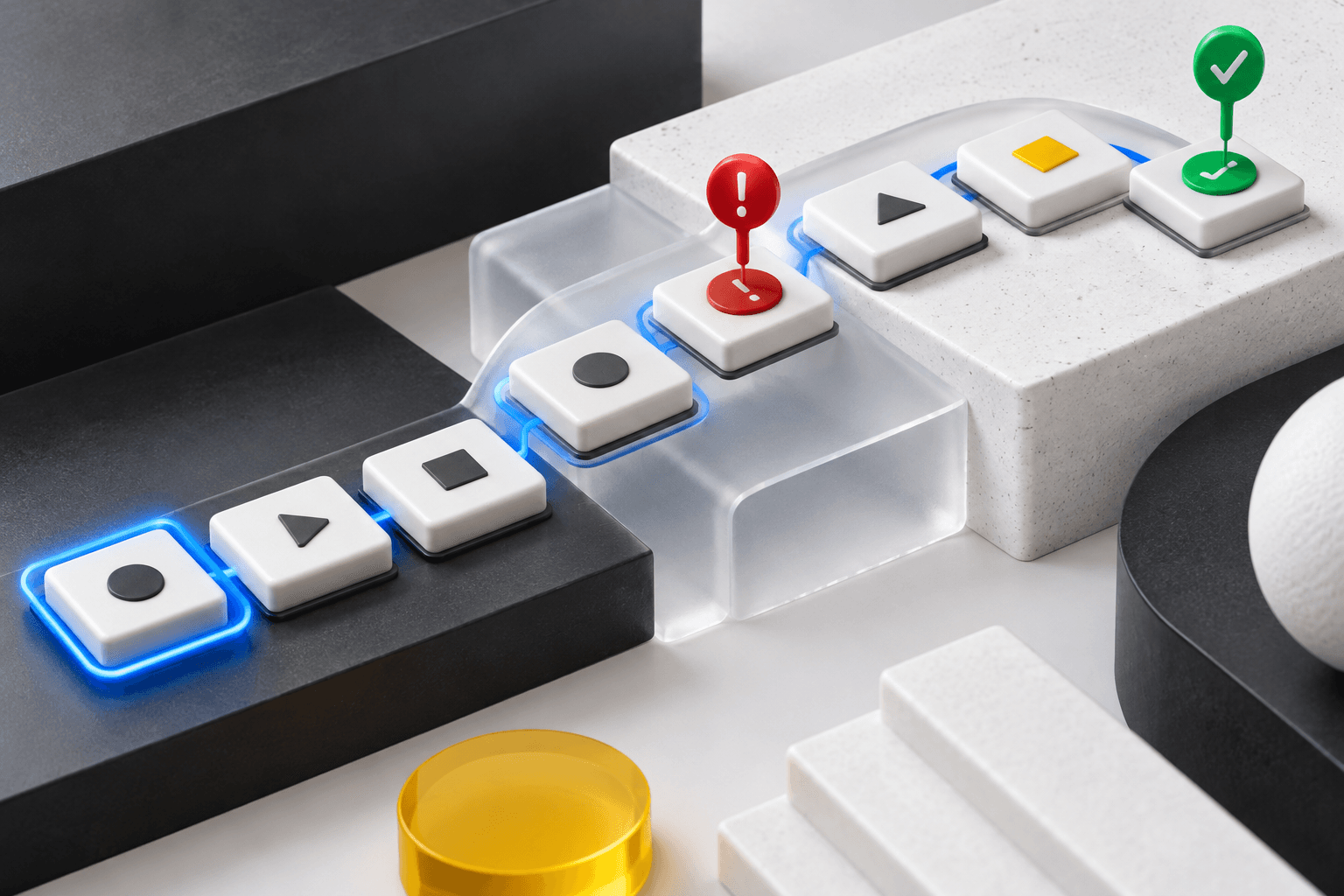
Automated checks are an essential safety net. They identify missing labels, invalid ARIA relationships, color contrast issues, and other repeatable defects quickly enough to belong in every pull request.
But a passing scan cannot tell whether focus moves through a workflow in a useful order, whether a status change is announced at the right moment, or whether a person can recover after a complex form error. Those questions depend on the lived interaction.
A practical accessibility practice combines automation with manual keyboard review, screen reader testing, and short task-based sessions. The first keeps regressions from becoming routine; the second evaluates the actual experience.
Accessibility is not a score to maximize at the end of a project. It is a continuous quality discipline that belongs in design critiques, component APIs, and release criteria.